.png)
%20(Medium)%20(Small).JPG)
Kazakhstan, a vast Central Asian country with varied landscapes, is also a land of cultural and religious diversity. Heir to numerous influences — nomadic, Soviet and modern — the country today offers a unique face where traditions and tolerance coexist. Before leaving, understanding the religions present in Kazakhstan allows you to better grasp its inhabitants, its customs and certain aspects of daily life.
Kazakhstan is an officially secular state, which means that religion is separated from political power. This particularity today encourages great religious freedom and peaceful coexistence between different communities.
Before the arrival of Islam, the nomadic populations of the territory mainly practiced shamanism and Tengriism, an ancestral belief centered on the worship of the sky (Tengri), nature and spirits. These traditions have left a lasting mark on Kazakh culture and still influence certain practices and worldviews.
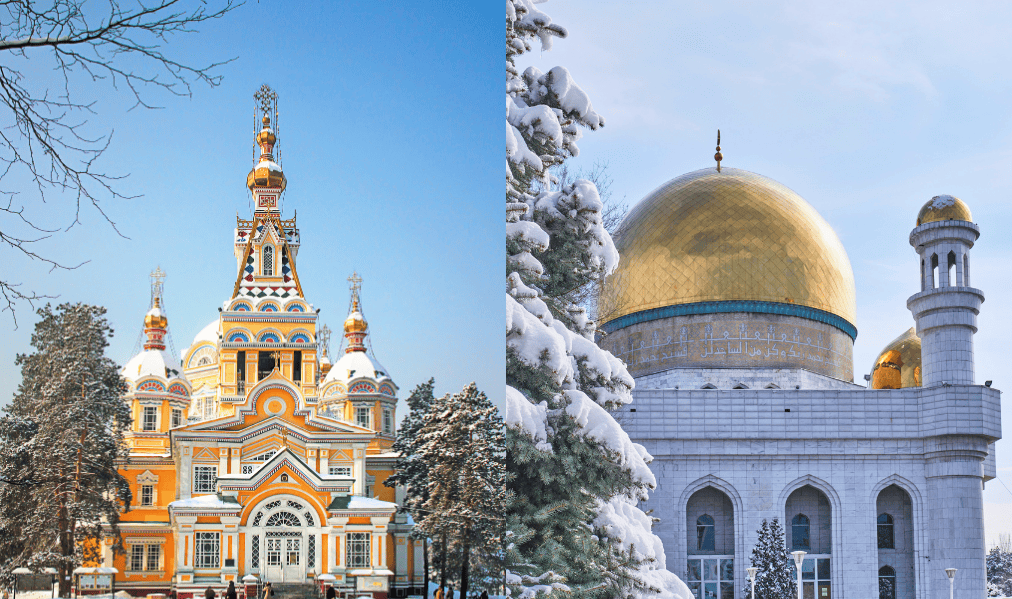
Today, the two main religions are:
The rest of the population is made up of various denominations, like Protestantism, Buddhism, Judaism, as well as people with no religious affiliation.
Islam is an integral part of Kazakhstan’s cultural identity, but it is distinguished by a generally moderate practice, far from the stricter images that one may associate with other regions. Influenced by nomadic traditions and the Soviet legacy, it is more embedded in daily life as a cultural reference point than as a rigid framework.
What you will notice when traveling:
Orthodox Christianity occupies an important place in the religious landscape, particularly in cities and northern regions. A legacy of Russian influences, it contributes to the country’s cultural diversity and is expressed through well-established architecture and traditions.
Historical legacy:
For more than 70 years, Kazakhstan was part of the Soviet Union, an officially atheist regime where religion was strictly controlled, even repressed. Places of worship were closed or monitored, and religious practice was relegated to the private sphere. Several generations thus grew up in a context where religion occupied a very limited place in daily life.
At independence in 1991, a religious revival began, with the reopening of mosques and churches as well as renewed interest in spiritual traditions.
Today, religion holds an essentially cultural place in Kazakhstan, without being omnipresent in public life. The country is often cited as an example of religious tolerance in Central Asia, where different beliefs coexist in a peaceful climate.
What you will observe on site:
This balanced approach contributes to making Kazakhstan particularly accessible for travelers to discover.
You will find everything:
.png)
.png)
.png)
.png)
.png)
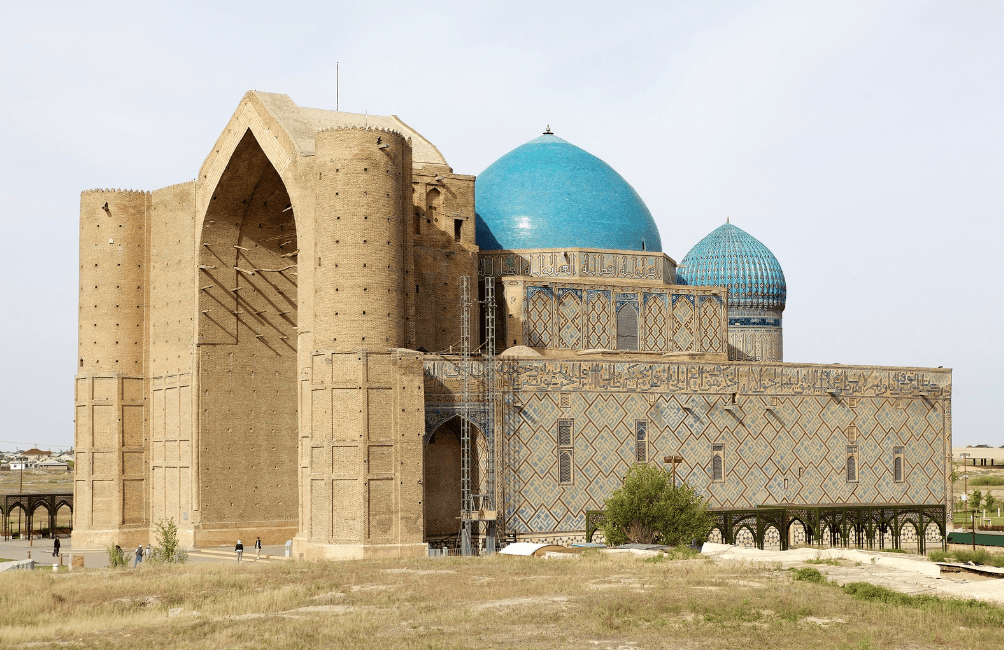
Dans certaines régions plus isolées, notamment en montagne ou dans la steppe, il est possible de découvrir des lieux marqués par des traditions anciennes liées à la nature.
In some more isolated regions, particularly in the mountains or in the steppe, it is possible to discover places marked by ancient traditions connected to nature.
.png)
🏔️ Check out our page dedicated to upcoming expeditions in Kazakhstan, particularly in the Mangystau region, rich in Islamic history, or to experience a horseback trek or jeep tours. Do you have a specific project or simply a few destination ideas? Contact us, we will help you organize your next trip!
Travelling to Kazakhstan as a single woman
Do you need a visa to go to Kazakhstan?
Visit Charyn Canyon in Kazakhstan
%20(1).gif)
.png)