.png)
%20(Medium)%20(Small).JPG)
Located in the heart of Central Asia, Uzbekistan is a fascinating destination where millennia of history, ancient caravan routes, and spiritual heritage converge. As a crossroads of civilizations along the famous Silk Road, the country has been shaped by numerous cultural and religious influences. Before you go, understanding the religions of Uzbekistan will help you better appreciate the local customs, way of life, and identity of its people.
Uzbekistan is a secular state, where religion is separate from political power. This structure guarantees a certain degree of religious freedom while maintaining moderate control over religious expression in public spaces.
Historically, before the arrival of Islam, the population practiced beliefs linked to Zoroastrianism, an ancient Persian religion based on the worship of fire, as well as forms of shamanism and animism. These ancient traditions have left their mark on the culture and certain popular practices.
Today, the religious breakdown is as follows:
Islam plays a central role in Uzbek culture, but its practice remains generally moderate. Influenced by Soviet history and local traditions, it is often expressed more as a cultural identity than as a strict religious practice.
What you’ll notice while traveling:
Uzbekistan is also a historic center of Sufism, a mystical branch of Islam, which has profoundly shaped the country’s spirituality and culture.
Orthodox Christianity has been present in Uzbekistan since the time of the Russian Empire and grew stronger during the Soviet era with the migration of Slavic populations.
Today, it remains visible, particularly in major cities such as Tashkent, where there are active Orthodox churches. This presence contributes to the country’s religious diversity.
Religion plays an important role in Uzbekistan, but remains generally regulated and moderate. The country is characterized by a certain religious stability and peaceful coexistence among different faiths.
What you’ll observe:
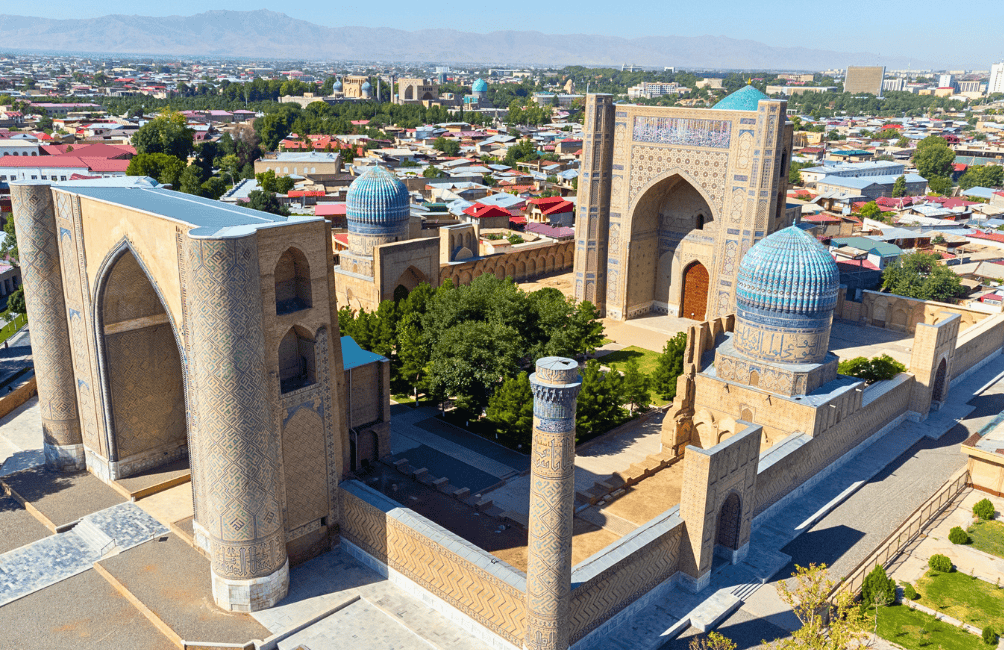
Bibi-Khanym Mosque in Samarkand: one of the most impressive in Central Asia, built under Tamerlane
Hazrat Imam Complex in Tashkent: an important religious center housing ancient manuscripts
.png)
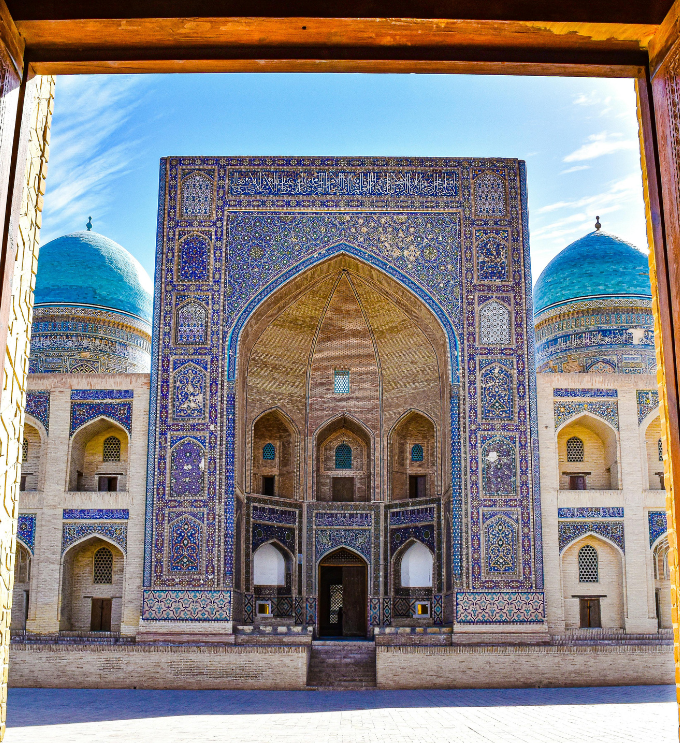
Kalon Mosque in Bukhara: located on the historic Po-i-Kalyan Square
.png)
The Mausoleum of Imam Al-Bukhari near Samarkand: a major pilgrimage site
.png)
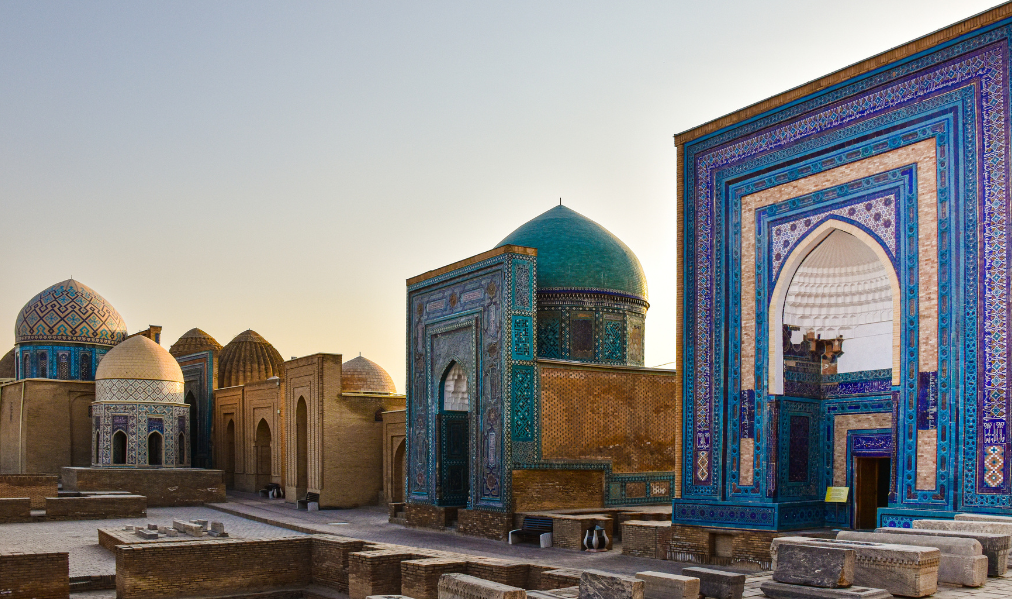
Shah-i-Zinda Necropolis: a complex of richly decorated mausoleums steeped in spirituality
.png)
Cathedral of the Assumption in Tashkent: the country’s main Orthodox place of worship
.png)
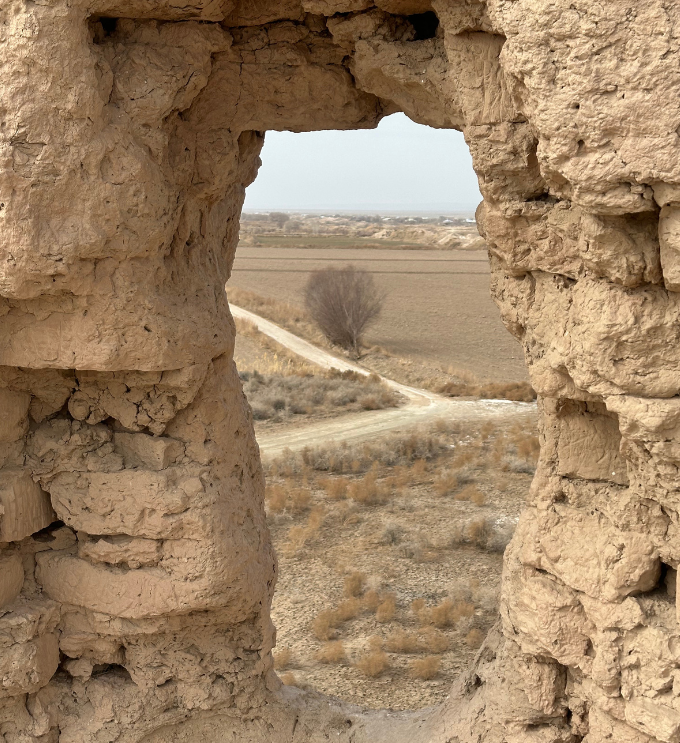
Beyond the iconic sites of Islam and Orthodox Christianity, Uzbekistan also reveals an even older heritage, featuring Zoroastrian ruins in the Khorezm region, as well as ancient fortresses and sites associated with fire worship.
🧭 While waiting for our next expeditions to Uzbekistan, discover its neighbor: Kazakhstan, and its vast steppes, through our multi-day treks on foot, horseback, or by jeep. And if you're still hesitating between the two destinations, check out our comparison article that will help you choose, or convince you to visit both!
Travelling to Kazakhstan as a single woman
Do you need a visa to go to Kazakhstan?
Visit Charyn Canyon in Kazakhstan
%20(1).gif)
.png)