.png)
%20(Medium)%20(Small).JPG)
.png)
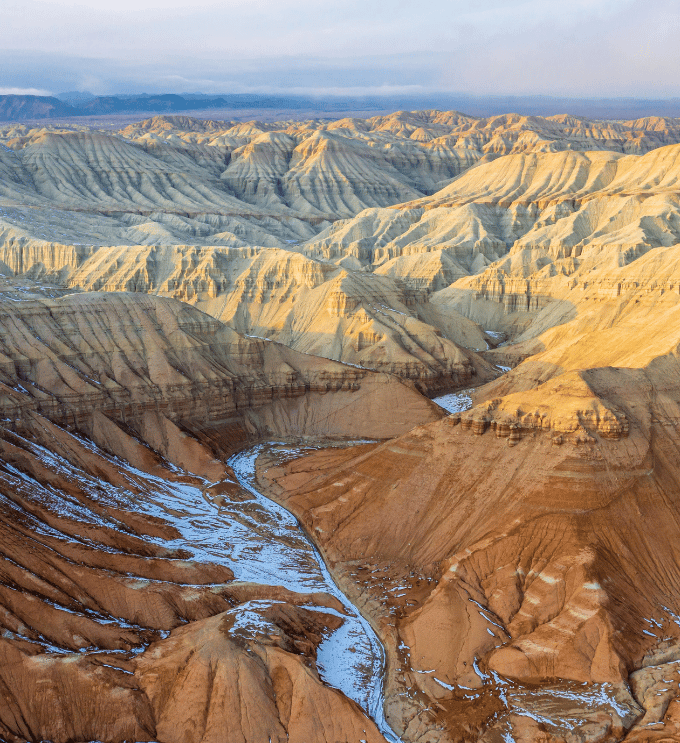
Nestled in the far west of Kazakhstan, between the Caspian Sea and the desert expanses of Central Asia, the Mangystau region is one of the most spectacular territories in the country. Still largely unknown to international tourism, it nevertheless offers landscapes of striking beauty, evoking both the surface of Mars and the canyons of the American West.
This region, shaped by millions of years of erosion and ancient seabeds, is a true open-air museum for geology enthusiasts, while also hosting a rich cultural and spiritual heritage, marked by underground mosques and pilgrimage sites.
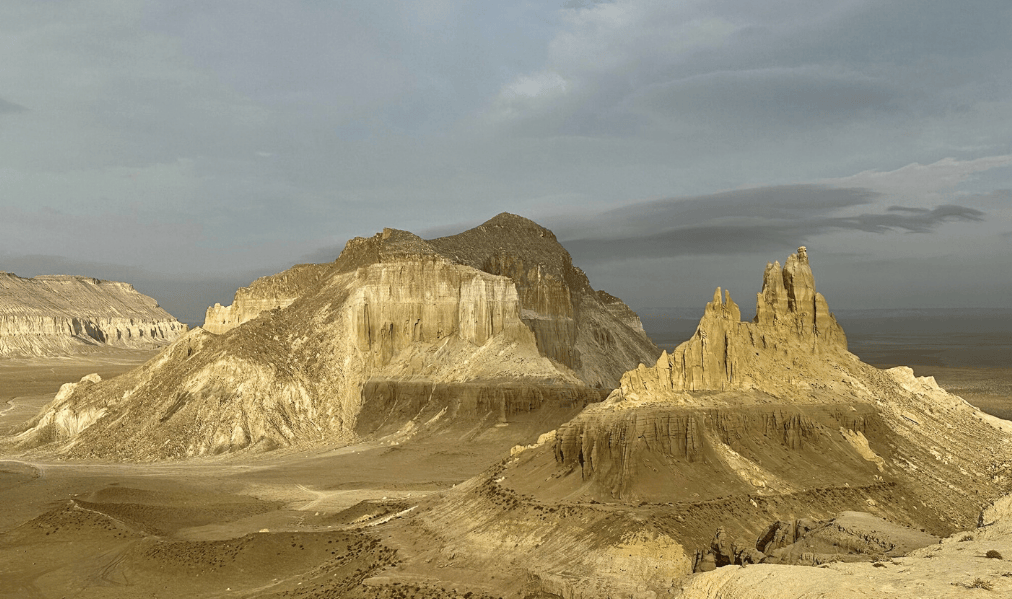
A true symbol of the region, Bozzhyra impresses with its white cliffs and sharp rock formations. The famous peaks nicknamed the “fangs” dominate a vast desert valley and offer spectacular panoramas, particularly at sunrise and sunset.
This landscape, once underwater, still reveals fossil traces visible in the rock.
.png)
Torysh is one of the most intriguing geological phenomena in Kazakhstan. Hundreds of rock spheres, sometimes perfectly round, are scattered over several kilometers.
Their origin remains debated, between sedimentary processes and natural concretions.
.png)
⚠️ Mangystau is a remote region with very little signage. It is strongly recommended to travel with a local guide or an organized expedition, especially to access the most remote sites.
Nicknamed the “Tiramisu Canyon,” Kyzylkup stands out for its colorful strata alternating red, white, and ochre. These geological layers create undulating landscapes that are particularly photogenic, very different from the paler reliefs of the rest of Mangystau.
.png)
Mangystau is not limited to its landscapes: it is also one of the major spiritual centers of Kazakhstan. The region counts several hundred religious sites, including many underground mosques carved into the rock.
The Beket-Ata mosque, dating from the 18th century, is one of the most sacred sites in the country. Nestled in a remote valley, it attracts pilgrims each year from all over Kazakhstan.
The journey to reach it, across the desert, is an integral part of the experience.
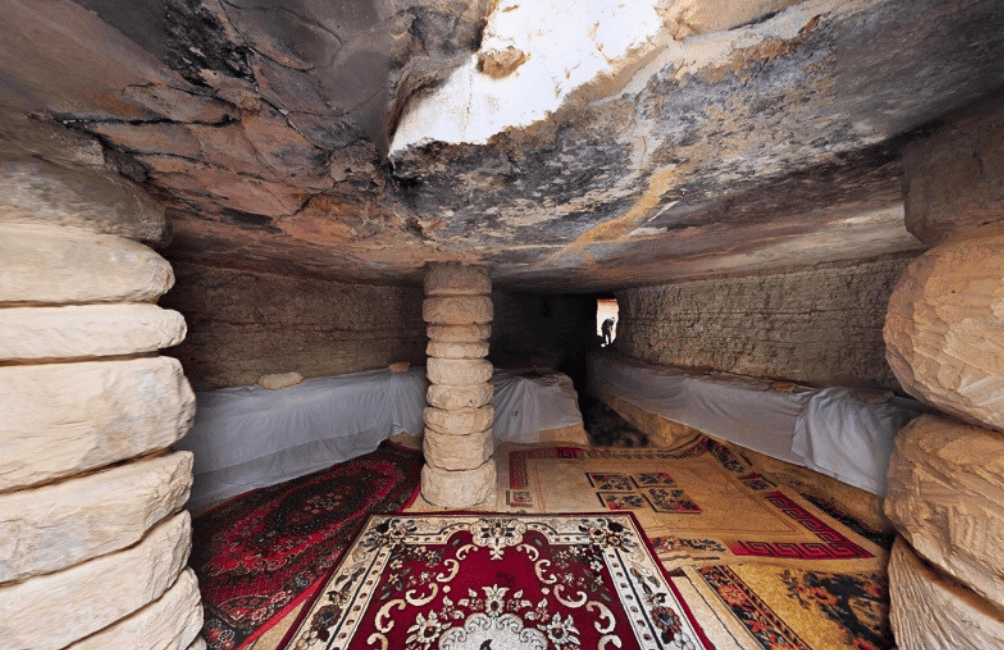
Older, the Shakpak-Ata mosque (probably 9th century) is a remarkable example of underground architecture. Carved directly into the rock, it stands out for its sculpted chambers and ancient engravings.
.png)
Mangystau borders the Caspian Sea, creating a striking contrast between desert landscapes and the vastness of the water. After several days of exploration in the desert, its beaches offer a welcome break.
Swimming is generally possible, particularly around the city of Aktau where there are developed and easily accessible beaches. However, some more remote or wild areas may present variable conditions (rocky seabeds, lack of supervision, difficult access), so it is advisable to seek local information and favor frequented spots.
.png)
→ Discover our article dedicated to Aktau, a coastal city and capital of Mangystau, an ideal starting point for all expeditions in the region, with many recommendations of places to visit.
The climate is desert-like, with marked contrasts:
Mangystau is above all an expedition destination, ideal for travelers seeking raw nature and isolation.
Among the possible experiences:
.png)
🧭 Join us on our upcoming expeditions in Kazakhstan, particularly in Mangystau, with off-the-beaten-path itineraries. Or contact us on Instagram or WhatsApp to discuss your travel project!
The main gateway to the region is the city of Aktau.
✈️ Direct flight of about 2h30 to 3h, with several departures per week
🚙 By car: more than 2,500 km, or several days on the road
✈️ Direct flight of about 2h30
🚙 By car: about 1,800 km
Once there, renting a 4x4 vehicle or using a local agency is necessary to explore the region.

Travelling to Kazakhstan as a single woman
Do you need a visa to go to Kazakhstan?
Visit Charyn Canyon in Kazakhstan
%20(1).gif)
.png)